Showing posts with label nature. Show all posts

Thursday, December 13, 2012

Dude, Where's That Star?: A Review of Tristan Gooley's The Natural Navigator


Title: The Natural Navigator: A Watchful Explorer's Guide to a Nearly Forgotten Skill
Author: Tristan Gooley
Edition: The Experiment (Hardcover, 2010)
Pages: 296
How I Came by This Book: This was sitting up on the "New Acquisitions" shelf at my library. Being the hiking, nature geek that I am I immediately had to check it out.
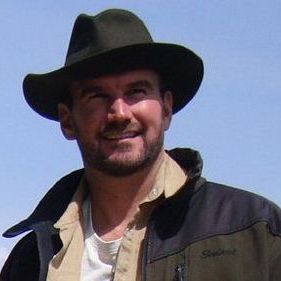

About the Author: Tristan Gooley set up his natural navigation school, The Natural Navigator, after studying and practicing the art for over ten years. His passion for the subject stems from hands-on experience. He has led five expeditions in five continents; climbed mountains in Europe, Africa, and Asia; sailed across oceans; and piloted small aircraft to Africa and the Arctic. He is the only living person to have both flown and sailed solo across the Atlantic. Tristan is a Fellow of both the Royal Institute of Navigation and the Royal Geographical Society and is the Vice Chairman of Trailfinders. He lives with his wife and two sons in West Sussex.

Synopsis: Before GPS, before the compass, and even before cartography, humankind was navigating. A windswept tree, the depth of a puddle, or a trill of birdsong could point the way home--and, for the alert traveler, they still can.

Whether you go exploring in the mountains or on a lunch break, natural navigation will keep you on course and open your eyes to the small wonders of the natural world. Almost anything in out environment can help us find our way--if we know what to look for. Adventurer and navigation expert Tristan Gooley unlocks the directional clues hidden in: the sun, moon, and stars; clouds; weather patterns; lengthening shadows; changing tides; plant growth; the habits of local wildlife; and more.

Enriched by helpful illustrations and filled with navigational anecdotes collected across centuries, continents, and cultures, The Natural Navigator proves that anyone with a curious mind can still find south by looking at the moon--and find adventure in their own backyard.

Review: I'm going to be honest with you--I don't notice the little things. I'm much more of a big picture kind of person. Regardless of the fact that my cover letters always say that I'm detail-oriented, I'm not really. (Don't look at me like that. Everyone lies in their cover letter.) Tristan Gooley is a details man. He's also, judging from that photo and some of the stories he tells in his fascinating book on natural navigation, kind of a badass.

I picked this book up in the hopes of learning some things about the world around me that would help me when I went hiking, which is about the only type of adventure that I go on. My desire to learn how to navigate stems from a very bad solo hike I took a few years ago in which I got ridiculously lost and ended up having to call a friend to come pick me up from wherever the hell I wound up in the end. Needless to say, dehydrated and tired and hopelessly-uncertain-of-where-I-am is not a good look for me.

In reading this book I learned a lot of interesting things, although whether or not they would be helpful to me without real, hands-on instruction is doubtful. I think a lot of people who read this book will come away with the same thought. While some of it is easily transferrable from page to reality--it's not hard to look at a tree and see the checkmark pattern caused by the prevailing wind or to locate the North Star--but some of the other things that Gooley talks about aren't as easy to learn from a book, especially when you're not that great at things like angles, patience, or having normal-sized hands.

The book is fun and full of lots of interesting anecdotes from Gooley's own personal experiences and from people throughout the world. Some of the chapters were a bit long and draggy, but that's probably because I don't really have any experience/interest in traversing deserts or oceans. Other chapters were chock-ful of information that could actually be useful for me. I would just have to have the book on hand or at least some notes to go by because there's no way I would remember all of it.

There's something in here for everyone, even those who prefer to have adventures in the city or in their own backyard. Some of the best bits of the book, however, are where Gooley shows off his wit. Two of my favorite passages are:
The name "Greenland" was chosen by Erik [the Red] to entice the Icelanders to come to a land that was anything but green. Twenty-five ships set sail from Iceland to follow Erik to the new land. Eleven of them didn't make it there to discover just how optimistic the name Greenland was... (p. 8)
Snails can find their way over relatively huge distances, a thousand feet or more, but lose this ability if they are shaken in a bag, which raises two questions: Why do they lose this ability and why were they shaken in a bag? (p. 216)
The Natural Navigator combines navigation, history, nature, environmentalism, humor, and anecdotal evidence to create a fun and fascinating read. I highly recommend this book to anyone who is interested in learning more about the world around them or even to anyone who is just looking to impress their friends at parties. Imagine how much cooler you'll look to the hot chick/guy you're chatting up when you tell them that you can not only point out constellations but can use them to find your way to their place. On second thought, that's probably not a good line to use.

I'm giving The Natural Navigator 4.5 out 5 Gabriels.


-Gabe

Wednesday, November 16, 2011

A Human Face for a Global Problem: A Review of Field Notes from a Catastrophe: Man, Nature, and Climate Change by Elizabeth Kolbert


Title: Field Notes from a Catastrophe: Man, Nature, and Climate Change
Author: Elizabeth Kolbert
Edition: Paperback
Publisher: Bloomsbury (2009)
Pages: 225
Challenges: GoodReads 2011 Reading Challenge
How I Came By This Book: This was just one of many books on global warming that I got from the library as research for that book I keep talking about.


About the Author: Elizabeth Kolbert has been a staff writer for the New Yorker since 1999. Prior to that, she was a political reporter for the New York Times. She lives in Williamstown, Massachusetts, with her husband and three sons.

Synopsis: Long known for her insightful and thought-provoking political journalism, Elizabeth Kolbert now tackles the controversial and increasingly urgent subject of global warming. In what began as a groundbreaking three-part series in the New Yorker, for which she won a National Magazine Award, Kolbert cuts through the competing rhetoric and poltical agendas to elucidate what is really going on with the global movement and asks what, if anything, can be done to save our planet. With a new afterword by the author, Field Notes from a Catastrophe is the book to read on the greatest challenge facing the world today.

Review: I've now read four books on the subject of climate change (and I still have several more waiting to be read), but Field Notes from a Catastrophe was the one that had the greatest impact on me. Whereas Under a Green Sky and The Discovery of Global Warming focused more on the scientific aspects of climate change and The End of Nature focused more on the personal aspects of the topic, Field Notes strikes a concise and well-written balance between the two. Not simply a book on the causes of climate change or the steps that we can take to halt its progress, Kolbert writes about the people who are affected by global warming and how they are dealing with its disastrous consequences.

At only a little over 200 pages, Kolbert's book leaves an indelible mark on the reader by doing two things: one, she visits impacted areas and interviews people who are dealing with the visible (and the sometimes even more dangerous invisible) environmental changes predicted by climate scientists; two, she weaves these accounts together with comprehensive research on climate change that not only goes back to the 1800's when carbon's affects on the environment were first posited, but further back through history to look at possible other societies damaged by climate change. The resulting narrative is compelling and it shows Kolbert's skill as a writer and as an investigative journalist.

Whereas other books may be filled with difficult jargon or poorly-explained diagrams, Kolbert's intended audience is the scientific layperson and she strives to be as clear and as readable as possible. She succeeds with flying colors and manages to do what other authors cannot--make a strong connection with the reader. Instead of over-saturating her pages with lingo, Kolbert uses personal narratives to show rather than to tell, which allows her to spend less time on technical exposition and more time on what's really important--the historical, political, and cultural story of how we ended up where we are and what can be done about it.

Informative and insightful, Field Notes from a Catastrophe really is one of the best books to read on the subject of climate change, especially if you are intimidated by too much scientific language. Kolbert is a phenomenal writer and I'd like to see her write more books on the subject. Actually, she could write a book about dryer lint and I'd probably read it.

I'm giving Field Notes from a Catastrophe 5 out of 5 Gabriels.


-Gabe

Thursday, November 3, 2011

In Which I Cannot Properly Review a Book: A "Review" of Bill McKibben's The End of Nature


Title: The End of Nature
Author: Bill McKibben
Edition: Paperback
Publisher: Anchor Books (1989)
Pages: 226
Challenges: GoodReads 2011 Reading Challenge
How I Came by This Book: This was one of several books that I checked out of my library in order to research global warming.


About the Author: Bill McKibben is the author of a dozen books about the environment, beginning with The End of Nature in 1989, which is regarded as the first book for a general audience on climate change. He is a founder of the grassroots climate campaign 350.org, which has coordinated 15,000 rallies in 189 countries since 2009. Time Magazine called him 'the planet's best green journalist' and the Boston Globe said in 2010 that he was 'probably the country's most important environmentalist.' Schumann Distinguished Scholar at Middlebury College, he holds honorary degrees from a dozen colleges, including the Universities of Massachusetts and Maine, the State University of New York, and Whittier and Colgate Colleges. In 2011 he was elected a fellow of the American Academy of Arts and Sciences. (truncated from this bio on his website).


Synopsis: More than simply a handbook for survival or a doomsday catalog of scientific prediction, The End Of Nature is a groundbreaking plea for radical and life-renewing change. The author argues that for the world to survive, we must make a fundamental philosophical shift in the way we relate to nature. (from GoodReads)


Review: One of the reasons why I hate being behind on my reviews is that I'm reviewing books weeks (and, sometimes, months) after I've read them. Until the death of my internet connection, I had read a book, immediately written a review, and moved on to the next one. Until I get caught up, I won't be able to do that for a while. Why am I bringing this up in a book review? Because, for the life of me, I can't seem to remember much about this book. 


Bill McKibben is a well-known name for many people who have been following the climate change debate. His books are included in the reading list at ClimateCrisis.net and he has written numerous articles, opinion pieces, and editorials over the years since The End of Nature came out in 1989. Despite all of this, however, I had yet to read anything that he had written. When I found this book in my library, I added it to my growing pile of books on climate change. Now I wish I had written a review of it (even if I'd had to do it on a giant rock with a hammer a chisel) immediately after I had set it down.


From what I can remember, I really enjoyed this book. Like the other books on global warming that I read around the same time, McKibenn's book was readable and it provided compelling evidence for his argument. I would have loved a bibliography or at least some citations, but it was a highly intelligent book that I remember reading fairly quickly. 


As I'm flipping through the pages now, I'm remembering that the book seemed a little muted. Rather than a ranting, raving treatise, McKibben's book is a softer approach to the topic. The writing was often lyrical and the pages were brimming with calls to go back to the days where nature was revered, respected, loved. He talks about DDT and other chemicals, yes. He talks about changing weather patterns and other consequences of climate change, yes. But he does it in a way that evokes something primeval. He talks of the Appalachian Trail, of taking a hike. He raises images in the reader's head of places in the great outdoors that they've visited before. For me, it was Letchworth State Park and this little trail in a small town near Rochester. For other people, it will no doubt be their own local natural treasures. 

This is a book of muted anger, of great sadness, and of deep trepidation. It's a book that was designed for the everyday reader, so it isn't bogged down by scientific mumbo-jumbo, although you do run into the occasional multiple-syllable word (but, really, who doesn't know what a chlorofluorocarbon is?). While apparently not as memorable as Under a Green Sky, The Discovery of Global Warming, or the soon-to-be-reviewed Field Notes from a Catastrophe, McKibben's book does touch on something deep. Perhaps it is not meant to be a book that sticks with you in terms of what he says; maybe it's a book meant to stick with you in terms of how it made you feel. 

I'm not going to rate this book right now, mostly because I feel that if I had reviewed it right away, I would have had a lot more to say about it and would have been able to rate it fairly. I'm going to have to reread it sometime next year (I devoured the global warming books without taking notes, which is why I was reading them in the first place--doh!), so when I do, you can expect a much better review. 

-Gabe