Showing posts with label science-fiction. Show all posts

Wednesday, November 14, 2012

Thou Art God: A Review of Robert Heinlein's Stranger in a Strange Land


Title: Stranger in a Strange Land
Author: Robert Heinlein
Edition: Ace Books (Paperback, 1991)
Pages: 525
How I Came by This Book: Ben from Dead End Follies suggested that I read this book in a comment on my review of Out of the Silent Planet. I obtained it from my library.


About the Author: Robert Anson Heinlein was an American novelist and science fiction writer. Often called "the dean of science fiction writers", he is one of the most popular, influential, and controversial authors of "hard science fiction". He set a high standard for science and engineering plausibility and helped to raise the genre's standards of literary quality. He was the first writer to break into mainstream, general magazines such as The Saturday Evening Post, in the late 1940s, with unvarnished science fiction. He was among the first authors of bestselling, novel-length science fiction in the modern, mass-market era. (from Goodreads)


Synopsis: Stranger in a Strange Land, winner of the 1962 Hugo Award, is the story of Valentine Michael Smith, born during, and the only survivor of, the first manned mission to Mars. Michael is raised by Martians, and he arrives on Earth as a true innocent: he has never seen a woman and has no knowledge of Earth's cultures or religions. But he brings turmoil with him, as he is the legal heir to an enormous financial empire, not to mention de facto owner of the planet Mars. With the irascible popular author Jubal Harshaw to protect him, Michael explores human morality and the meanings of love. He founds his own church, preaching free love and disseminating the psychic talents taught him by the Martians. Ultimately, he confronts the fate reserved for all messiahs. (from Amazon.com)

Review: This novel took me ages to read. And by ages, I mean weeks. It's not that it wasn't an enjoyable read or that it was too difficult or anything like that. I just never found time to read it outside of my job at the bookstore. In fact, I didn't make time to read anything the last few weeks. And for that I apologize.

Anyway, Stranger in a Strange Land was originally released in the 1960s as a much shorter book than the one that I read. As Virginia Heinlein states in her introduction to this edition of the book, "This book was so different from what was being sold to the general public, or to the science fiction reading public in 1961 when it was published, that the editors required some cutting and removal of a few scenes that might then have been offensive to public taste." I've never read the original version that was published, so I don't know which scenes they might be, but I can probably guess.

The story revolves around the Man from Mars, Valentine Michael Smith, born to human parents but raised by Martians and brought back to Earth as a young man. He has to learn how to be human and is helped along the way by newspaper columnist Ben Caxton, nurse Jill Boardman, writer/doctor/lawyer Jubal Harshaw, and a cast of strange and quirky characters who all coalesce around the Man from Mars as he changes from a naive but oddly talented man-Martian to a willing and able but hated Messiah.

There was a lot about this book that I liked: the characters were interesting, the dialogue was fascinating, the philosophical questions that were raised made me think. Heinlein often tells the story rather than showing it, which is a bit of a pet peeve for me, but he is a skilled writer who can spin a good yarn. The character development is mostly smooth and believable and the end result, though predictable, is satisfying. All-in-all, this was a good read and one that I would probably pick up again. HOWEVER...

There is a LOT of sexism, homophobia, and misogyny in this novel. Jill's comment about rape being the woman's fault "nine times out of ten" is just the tip of a very large iceberg. You might think that I'd accept the "He was from a different time" argument, but I won't. One of the things that bothers me about science fiction is that these authors are able to envision a world in which space travel is possible or where people can move things with their minds but not one where women are seen as equal and the LGBT community is accepted. Up until recent science fiction television shows like Caprica and Stargate Universe, there were pretty much no real gay or lesbian characters in sci fi. Heinlein's characters create a worldview in which jealousy doesn't exist and to love one is to love all and yet there is still rampant disdain for homosexuality and women. The followers of Michael's church are living in one big naked commune in the end and yet they still hold onto the prevailing attitudes of the day on some issues. Why challenge some notions and not others?

The book covers such topics as human sexuality, love, religion, human nature, and scores of other things that the world's religions and philosophies argue about. It may offend some in its treatment of religion, but for others it may be inspiring. For some it may have no effect at all. It will definitely make you think, however, about the things that you hold dear, the things that you think that you "grok".

I'm giving Stranger in a Strange Land 4 out of 5 Gabriels. It loses half a Gabriel for the sometimes tedious storytelling that could have been solved by showing not telling and it loses another half of a Gabriel for it's ideas on women and homosexuality. Definitely an interesting book, but sometimes it will make you want to throw it across the room.


-Gabe

Sunday, October 28, 2012

Out Amongst the Stars: A Review of Stanislaw Lem's The Star Diaries


Title: The Star Diaries
Author: Stanislaw Lem (translated by Michael Kandel)
Edition: Hardcover (Seabury Press, 1976)
Pages: 275
How I Came by This Book: I was looking for sci-fi authors I'd never read and Lem's name came up. I acquired this from the library I work at.


About the Author: Stanisław Lem (12 September 1921 – 27 March 2006) was a Polish science fiction, philosophical and satirical writer. His books have been translated into 41 languages and have sold over 27 million copies. He is perhaps best known as the author of Solaris, which has twice been made into a feature film. In 1976, Theodore Sturgeon claimed that Lem was the most widely read science-fiction writer in the world.

His works explore philosophical themes; speculation on technology, the nature of intelligence, the impossibility of mutual communication and understanding, despair about human limitations and humankind's place in the universe. They are sometimes presented as fiction, but others are in the form of essays or philosophical books. Translations of his works are difficult and multiple translated versions of his works exist.

Lem became truly productive after 1956, when the de-Stalinization period led to the "Polish October", when Poland experienced an increase in freedom of speech. Between 1956 and 1968, Lem authored 17 books. His works were widely translated abroad (although mostly in the Eastern Bloc countries). In 1957 he published his first non-fiction, philosophical book, Dialogi (Dialogues). Dialogi and Summa Technologiae (1964) are his two most famous philosophical texts. The Summa is notable for being a unique analysis of prospective social, cybernetic, and biological advances. In this work, Lem discusses philosophical implications of technologies that were completely in the realm of science fiction then, but are gaining importance today - like, for instance, virtual reality and nanotechnology. Over the next few decades, he published many books, both science fiction and philosophical/futurological, although from the 1980s onwards he tended to concentrate on philosophical texts and essays.

He gained international fame for The Cyberiad, a series of humorous short stories from a mechanical universe ruled by robots, first published in English in 1974. His best-known novels include Solaris (1961), His Master's Voice (Głos pana, 1968), and the late Fiasco (Fiasko, 1987), expressing most strongly his major theme of the futility of mankind's attempts to comprehend the truly alien. Solaris was made into a film in 1972 by Russian director Andrei Tarkovsky and won a Special Jury Prize at the Cannes Film Festival in 1972[7]; in 2002, Steven Soderbergh directed a Hollywood remake starring George Clooney. (from GoodReads)


Synopsis: Ijon Tichy is an amiable, innocent cosmic traveler with a magnetic attraction for mishaps of the most unusual kinds; his absurd adventures and misfortunes make pointed and occasionally not-so-gentle mockery of various twentieth-century beliefs and institutions.

Called into question as Tichy is best by mind-boggling time warps and "civilizations" that are curious, to say the least, are: science and the rational mind, human progress, the "rightness" of the  universe, theology and Christianity, the sanctity of life, motherhood--and a host of other things that we tend to take for granted, and even pride ourselves on.

In compensation for this intellectual rock-throwing, the reader will be entertained by Lem's masterful creations, including the sadomasochistic robots of Cercia (who talk like Chaucer), the squamp hunt wherein squamp (huge beasts with impervious armor) are literally invaded and conquered within, accounts of Tichy's unwitting cannibalism, and his personal quarrel with Plato.

The reader may find, however--and this is characteristic of Lem's deft satire--that the laughter is often at his own expense.

Review: I love satire and I love sci-fi, so a satirical sci-fi book was right up my proverbial alley. While I wouldn't really classify this as actual sci-fi, there are fantastical adventures in space, so I guess it fits the bill somewhat. It is first and foremost a satirical/philosophical kind of book. The tales of inter-galactic traveler Ijon Tichy turn a critical eye toward everything from Communism to history to the human race in general. And they do it with a wicked sense of humor. 

The novel is actually a series of short stories labelled as different voyages. The seventh voyage is about a time when Tichy went through a series of gravitational vortices and ended up with multiple versions of himself all quarreling with each other. The fourteenth voyage follows him as he visits another planet in order to hunt squamp. The twenty-first voyage is a philosophical treatise on the nature of life and forced evolution. As the translator's note states, the voyages are put in numerical order for this book (as Lem intended them to be read), but they weren't written in that order. Therefore, the stories vary in terms of structure, quality, length, etc., although they still carry the same darkly humorous tone and the same mockery of humanity and our history. As Kandel states in that note, however, "the reader, looking chronologically, will find a definite shift from playful anecdote to pointed satire to outright philosophy (p. 274)." As I didn't read them chronologically, I wasn't able to get a real sense of how he grew as an author in that way, but you can definitely see the differences in the stories throughout the book. 

Ijon Tichy is the only constant figure in these stories and is a pretty likeable fellow. He's a bit pompous and can be a little cantankerous, but he's funny and interesting and his observations about life, the universe, and everything are prescient. I think that in some ways he could be considered an unreliable narrator (especially after reading the twenty-eighth voyage, which I didn't really like), but I don't know if that was Lem's original intent or if that idea developed over the course of writing these stories. I think that if the stories were to be read in chronological order it would be easier to see Ijon's character development just like it would be easier to see Lem's development as a writer. Instead, the order of the tales leaves Ijon in a continuous limbo: here he's a bit of an oafish ass, there he's a more mature and more thoughtful person, etc. 

Some of the stories drag (I'm looking at you twenty-first voyage!), but others are a lot of fun to read. My personal favorites are the seventh, eighth, eleventh, and, especially, the twentieth. The fact that all of the stories have a unique feel, voice, and overall message make it an interesting book all around, but I prefer the more humorous/satirical stories to the philosophical ones. If you only read one of these stories, I would suggest the twentieth. It's about how Ijon is forced to go to the future to work with an agency trying to correct history and ends up making it worse (with a bit of a twist and a lot of punny plays on the names of historical figures). It's hilarious and thought-provoking. 

I think the main thing that The Star Diaries accomplishes is to make the reader think. You think about science and unbridled progress; you think about religion and whether or not its a good thing or a bad thing; you think about individualism and how horrible it would be to lose it; you think about humanity and how we would look to outsiders who live peaceful, constructive lives. 

I'm giving The Star Diaries 4 out of 5 Gabriels. It's a good book with some slow parts that kind of detract from the enjoyment of it. As much as I like reading books that make you think, I'd rather not get sleepy while I do it. Also, I REALLY hated the twenty-eighth voyage. I'd read the book again, but I'd skip certain stories the next time I did. 


-Gabe

Monday, November 7, 2011

The League of Extraordinary Gentlemen Book Challenge 2012

2012 is almost upon us and that means a new year of reading challenges. Considering I've been pretty lax on completing the ones that I had signed up for this year, I was trying to be a good boy and not join as many next year. And then I saw this challenge on Sarah Says Read.

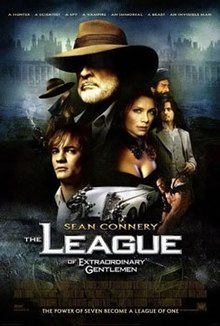
Hosted by Hanna at Booking in Heels, The League of Extraordinary Gentlemen Book Challenge is a year-long challenge that asks participants to read the books that each of the main characters in this film came from. Some I've already read and some I haven't, but I love a good reread so I don't mind.

I'm adding my own twist to the challenge and reading the original graphic novel by Alan Moore that the movie is (loosely) based on. I haven't read many (read: any) graphic novels other than Maus and I'd like to start.

I'll also be reviewing the film once I've finished all of the books. Here's what the challenge requires me to read:

1) King Solomon's Mines by H. Rider Haggard (Allan Quartermaine)
2) Dracula by Bram Stoker (Mina Harker) [reread]
3) 20,000 Leagues Under the Sea by Jules Verne (Captain Nemo)
4) The Adventures of Tom Sawyer by Mark Twain (Tom Sawyer) [reread]
5) The Picture of Dorian Gray by Oscar Wilde (Dorian Gray) [1/2 reread--I couldn't finish it the first time I read it.]
6) The Strange Case of Dr. Jekyll and Mr. Hyde by Robert Louis Stevenson (Dr. Jekyll and Mr. Hyde) [reread]
7) The Invisible Man by H.G. Wells (Rodney Skinner) [sort of]*
8) The Phantom of the Opera by Gaston Leroux (The Phantom) [reread]
9) The Final Problem by Sir Arthur Conan Doyle (James Moriarty) 

And with my one addition:

10) The League of Extraordinary Gentlemen by Alan Moore

I'm more than a little excited about this challenge, which begins on January 1, 2012. If you're interested in signing up, head over to Booking in Heels!

-Gabe

*See Hanna's post for the reason for the "sort of."

Monday, October 17, 2011

Resist the Temptation of the Beast: A Review of Perelandra by C.S. Lewis


Title: Perelandra
Author: C.S. Lewis
Edition: Hardcover
Publisher: Macmillan Co. (1944)
Pages: 238
Challenges: GoodReads 2011 Reading Challenge
How I Came by This Book: Nonners from Ridiculous Reviews has gotten me hooked on C.S. Lewis, first by suggesting that I read The Screwtape Letters and then insisting that I check out the first book of his Space Trilogy, Out of the Silent Planet. This is the second book in that trilogy, which I intend to finish by the end of this year. Perelandra was obtained at my library.


About the Author: Clive Staples Lewis (1898–1963) was one of the intellectual giants of the 20th century and arguably the most influential Christian writer of his day. His major contributions in literary criticism, children's literature, fantasy literature, and popular theology brought him international renown and acclaim. He wrote more than thirty books, allowing him to reach a vast audience, and his works continue to attract thousands of new readers every year. His most distinguished and popular accomplishments include The Chronicles of Narnia, Out of the Silent Planet, The Four Loves, The Screwtape Letters, and Mere Christianity. (taken from a much longer bio at HarperOne)

Synopsis: Written during the dark hours immediately before and during the Second World War, C. S. Lewis's Space Trilogy, of which Perelandra is the second volume, stands alongside such works as Albert Camus's The Plague and George Orwell's 1984 as a timely parable that has become timeless, beloved by succeeding generations as much for the sheer wonder of its storytelling as for the significance of the moral concerns. For the trilogy's central figure, C. S. Lewis created perhaps the most memorable character of his career, the brilliant, clear-eyed, and fiercely brave philologist Dr. Elwin Ransom. Appropriately, Lewis modeled Dr. Ransom after his dear friend J. R. R. Tolkien, for in the scope of its imaginative achievement and the totality of its vision of not one but two imaginary worlds, the Space Trilogy is rivaled in this century only by Tolkien's trilogy The Lord of the Rings. Readers who fall in love with Lewis's fantasy series The Chronicles of Namia as children unfailingly cherish his Space Trilogy as adults; it, too, brings to life strange and magical realms in which epic battles are fought between the forces of light and those of darkness. But in the many layers of its allegory, and the sophistication and piercing brilliance of its insights into the human condition, it occupies a place among the English language's most extraordinary works for any age, and for all time.

In Perelandra, Dr. Ransom is recruited by the denizens of Malacandra, befriended in Out of the Silent Planet, to rescue the edenic planet Perelandra and its peace-loving populace from a terrible threat: a malevolent being from another world who strives to create a new world order, and who must destroy an old and beautiful civilization to do so. (taken from GoodReads)

Review: While I obviously wrote a review of Out of the Silent Planet, I've found that, when I'm trying to actually talk to people about it, I'm never quite able to get at the heart of what I love about it. A friend of mine recently found the Space Trilogy at a used book store and while I was attempting to explain why he should read it, words actually failed me. Maybe I'm better at writing about books than I am at talking about them. Or maybe it's just that over time, as the book has settled into my brain, I've found so much to love about it that it all gets jumbled up on the way out.

With this undying adoration in mind, I turned to Perelandra, the second book in the trilogy. Once again Dr. Ransom travels from the safety of Earth to a far off planet--this time, Venus--and finds himself inextricably linked to what happens to the inhabitants of that world. I had been expecting another Out of the Silent Planet, with Ransom's humanity allowing him to connect with the Perelandrans and becoming a better man for it, and in some ways that was what I found. I was dismayed, however, by the fact that Perelandra was more of a treatise on temptation than it was a novel. Lewis' signature writing style--warm, sweeping, and highly imaginative--was present, but the book seemed to be more in line with The Screwtape Letters than with the first book in the trilogy.

I think The Screwtape Letters is a fantastic book and I would read it again in a heartbeat. That doesn't mean, however, that I enjoyed Perelandra. The book follows Ransom as he befriends one of only two sort-of human inhabitants on Venus. She is the Green Lady, the Eve of this world, and has become separated from her Adam (the King) due to the fact that most of the planet is water with a few floating islands and that Maledil (God) has forbidden either of them to live on the "fixed land." Soon after Ransom's initial encounter with her, Weston, one of the men who had kidnapped Ransom in the first novel, falls from the Perelandran sky in a space craft and begins trying to befriend the Green Lady as well. Ransom soon realizes that this is not Weston at all, but a demon, possibly even the Devil himself, using Weston's body in order to achieve his nefarious goal on that planet--to cause the Green Lady to disobey God, thereby leading once again to the Fall of Man.

Now, I have no problem with the premise of this novel. The idea is fascinating and I rather liked the Green Lady. I think she has a point when she insinuates that it is knowledge and not time that makes you older. I also think that this is a book that could have been done well had it not devolved into the three main characters sitting around talking the entire time. Lewis is a masterful writer and his ideas about philosophy and theology are usually well-reasoned--even if I don't agree with them, I enjoy reading what he has to say. But Out of the Silent Planet was a novel with a plot and it was exciting. Perelandra, while beautifully-written, was more an exploration of an idea than a novel.

Towards the end of the book, things did begin to pick up. I won't give anything away, but there are a few chapters that had me wondering what was going to happen next. These chapters soon gave way, however, to more of the same plodding narrative that I had come to associate with this book. To add insult to injury, the book's final chapter basically spiraled into a paean that lasted for way too long and that made me wonder whether or not Lewis had decided that the book was just a few pages too short and that he needed filler.

One thing that I did love about this book was how refreshingly unique everything was. Like Malacandra, everything about Perelandra was so different from anything I ever could have imagined and yet Lewis excels at description so I had no trouble picturing it all in my head. The thing that I've come to like most about Lewis' works is how fully they transport me to the worlds depicted within them. Perelandra is the rule in this respect, rather than an exception. While it took me a few chapters to get into the setting of the book--mostly because of the way the narration was delivered by someone outside of the story, which was distracting from time to time--once I was in, I was in. Perelandra became as real to me as Malacandra did and it was every bit as hauntingly beautiful.

As much as I would like to rate this book as highly as I've rated other Lewis books, I just can't. I wanted more doing and less saying. I missed the hnau of the first book (Lewis' characters might say that I was a backward-looking person and that I didn't appreciate the new because I was too attached to the old), as well as the feeling of inclusion that I had reading Out of the Silent Planet. Whereas that novel didn't bash you over the head with religiosity, Perelandra not only did, but did it with a sledgehammer. Gone was the universality that I had associated with Maledil and with the themes of the previous book. This one makes no bones about being a decidedly Christian narrative, which wouldn't be an issue if it weren't that it is so markedly different from the first novel. There is, of course, a reason for this--Malacandra represents the old ways of the universe, whereas Perelandra represents the new. The new, for Lewis, is Christianity.

There was a lot to like about this book, but there was even more that I disliked. I'm looking forward to reading That Hideous Strength, the last book in the trilogy, but I know that, when I do read it, I'll be going into it with a much more guarded approach. With two vastly different narratives preceding it, who knows what I'll find within its pages.

I'm giving Perelandra 3 out of 5 Gabriels.


Favorite Quote:
Ransom: How far does it go? Would you still obey the Life-Force if you found it prompting you to murder me?
Weston: Yes.
Ransom: Or to sell England to the Germans?
Weston: Yes.
Ransom: Or to print lies as serious research in a scientific periodical?
Weston: Yes.
Ransom: God help you! (p. 96-97)

I just love how Ransom seems to have his priorities a little mixed up.

-Gabe

PS: The title of this review was taken from lyrics to a 2Pac song. I've never heard it before, but a quick thank you to Google to finding a pretty fitting set of lyrics from the query "songs about temptation."

Monday, July 11, 2011

When Film Gets It (Sort Of) Right: A Review of Stanley Kubrick's Clockwork Orange

Title: A Clockwork Orange
Year: 1971
Starring: Malcolm McDowell
Plot: Based on Anthony Burgess' novel of the same name, A Clockwork Orange is the story of violent delinquent Alex and his three droogs. It's also the story of a corrupt government and the harmful ways in which it tries to combat crime. But mostly it's the story of a boy's transformation from criminal to reformed criminal and back again.
Challenges: Books to Movies Challenge


Review: Those of us who are fans of the novel will obviously find fault with some of the things that Kubrick chose to do in this film. The most obvious, of course, is the exclusion of the final chapter of the novel from the film entirely. While this could be excused by the fact that the American edition of the novel was missing that chapter, I'd like to think that Kubrick could've, I don't know, done a little research. And he probably did and simply chose to ignore the last chapter anyway. It makes the film far more chilling that it ends the way it does.

Anyway, even with the little nit-picky points that I could make (for example, why was the writer in a wheelchair and what was up with the oddly-shaped added character of Julian?), this is an insanely good film. It's terrifying, darkly funny, and trippy in a way that only Kubrick knows how to do. It also follows the novel pretty well, oftentimes taking the script directly from the novel. Alex remains as our "humble narrator" and very little is removed from the book for the film.


The cinematography is genius, with strange angles, chilling close-ups, and good use of space. Whoever designed the costumes and hair for the film was probably on acid, but in this case I think that it adds something to the film. It has a seventies' flavor without drawing too much attention to the fact that it was a film made in the seventies. Burgess' intention was to create a novel that would stand the test of time, one that wasn't bogged down by a slang or a setting that belonged too much to one era. I think Kubrick did a good job of keeping that idea intact while still giving his original audience a taste of their own time period.

The soundtrack is, I think, the most incredible aspect of the entire thing. Kubrick sprinkles in quite a bit of Alex's beloved Ludwig Van and throws in some other decent classical pieces as well. The music always fits the scene and it's played in such a way that it manages to be orchestral, synthetic, and creepy all at once. It sets the mood for the film, right from the beginning, just as much as the opening shot of Alex staring into the camera does. Brilliant film-making on Kubrick's part.


I wish that they had used more of the Nadsat that was used in the book, but I think audiences would reject the film if they had, especially those who have never read the book. It's much harder to immerse yourself in a slang that you aren't familiar with if you're watching it on screen than it is to do so if you're reading it in a book. Kubrick uses many of the words ("horrorshow," "kroovy," "rookers," etc.), but does so sparingly, sprinkling them throughout the film rather than using Nadsat as the primary means of communication for Alex and his droogs.

Obviously, there are some things in this film that might upset some people or trigger bad memories. The film, like the book, contains violence and rape, and I wouldn't recommend it if you're overly sensitive to these things. I would recommend it, however, whether or not you liked the book. Malcolm Macdowell is the perfect Alex and his performance is nothing short of amazing. He portrays Alex so close to the way that I pictured him in the novel and adds an even eerier delusional innocence to him than I could have imagined.


If I were reviewing this film simply as a film, I would give it a full five Gabriels. Since, however, I'm looking at it in conjunction with the novel, it gets only 4 out of 5. While the film is arguably one of the best movie adaptations of a novel ever, there are some things that could have been improved upon.

-Gabe

Saturday, June 25, 2011

A Real Horrorshow Novel: A Review of Anthony Burgess' A Clockwork Orange

I put watching the film of A Clockwork Orange on hold last night in order to watch the Marriage Equality Bill (finally) pass in New York State. As an (almost) lifelong New Yorker and an (absolutely) lifelong member of the LGBT community, yesterday was a proud moment and a victory all at the same time. I didn't want to put off writing this review any more, though, so I'll have to post the film review on another day.


Title: A Clockwork Orange
Author: Anthony Burgess
Edition: Paperback
Publisher: W.W. Norton & Co. (1986)
Pages: 213
How I Came By This Book: To be honest, I don't remember exactly what got me interested in reading the book in the first place. I had a friend in college, Patrick, who loved the movie and my downstairs neighbors thought that I was crazy when they found out last year that I hadn't read the book OR seen the film. I know that I originally borrowed it from the library and ended up buying my own copy soon after that. This is my second time reading the book.
Challenges: Read Me Baby, 1 More Time; Books to Movies; GoodReads 2011 Reading Challenge

Synopsis: A vicious fifteen-year-old droog is the central character of this 1963 classic. In Anthony Burgess's nightmare vision of the future, where the criminals take over after dark, the story is told by the central character, Alex, who talks in a brutal invented slang that brilliantly renders his and his friends' social pathology. A Clockwork Orange is a frightening fable about good and evil, and the meaning of human freedom. And when the state undertakes to reform Alex to "redeem" him, the novel asks, "At what cost?"

This edition includes the controversial last chapter not published in the first edition and Burgess's introduction "A Clockwork Orange Resucked."

Review: There are some novels that I love so much that I don't even know where to begin. A Clockwork Orange is one of them. Burgess himself didn't really like the novel and he was especially angry that the American publishers left out the last chapter, 21, for various and sundry (and incomprehensible) reasons. He rants and raves in his "A Clockwork Orange Resucked" piece that adorns the front end of my copy of the novel. I happen to disagree with his take on his novel and think he's either being too harsh or too cynical or too bitter or too...something. For me, this novel is a treasure, one that I enjoy revisiting again and again.

The plot is simple and complex at the same time. A boy named Alex enjoys violence and rape with his droogs (or friends) in a dystopian future England. He crosses his droogs, they rat him out, and he ends up in prison. That's the simple part. The complex bit is from Part II to the end. Alex agrees to be "reformed" using a controversial new technique and finds that he has been left with no personal choice in life. He can't be bad because to do so makes him ill. But he doesn't necessarily want to be good; he's just forced to be to save himself from pain. The rest of the story follows Alex after he's left out of prison and the injustices brought against him by his former victims. There's a bit more to it, but I don't want to give too much away.

There are two things that are usually talked about when this novel is mentioned: violence and language. The former is heavily present throughout the novel and can be a bit much for the squeamish. The things Alex does are inhuman and unconscionable and no one will deny that. But the violence is necessary for the story and I truly believe that it needs to be as horrific as it is. Burgess takes the problem of hooligans, hoodies, and punks and lets it take on an even more sinister twist. Because Alex is so extreme, his story stands out more from the common thug on the street.

The latter, language, is also prevalent but not in the way you may be thinking. I'm not talking about swearing or anything. I'm talking about Nadsat, a slang created by Burgess using Russian words, schoolboy rhyming slang, and other things. It can be hard to read at first but within the first few chapters I found that I was understanding what they were saying with no problem. One of the book's themes is brainwashing and Burgess brainwashes his readers into speaking Nadsat. It's the most unique use of language I've seen in a novel so far and it was one of the things that impressed me most about the book the first time I read it.

I remember the first time I read this book it was while I was working at the library and the girl I was working with thought I was nuts when the following exchange occurred:

Me: Oh my God, this is the best sentence I've ever read.
Her: ????
Me: "I kuppetted a gazetta, my idea being to get ready for plunging back into normal jeezny again by viddying what was ittying on in the world."
Her: What the f***?
Me: (translating) "I bought a newspaper, my idea being to get ready for plunging back into normal life again by seeing what was going on in the world."
Her: Um...okay...

It isn't a particularly profound sentence, but it was one of those sentences that made me fully realize that I wasn't just reading the Nadsat words, I was understanding them. When I reread the book this time and I came upon that sentence again, I remembered that moment and was again struck by my ability (without a glossary) to pony what Alex was skazatting. I've talked to other people who have read the novel who have had similar moments, so I know that I'm neither crazy nor totally alone.

Alex himself, your humble narrator, is a violent, horrible young man who deserves to go to prison. No one will argue that point...at least I hope not. His crimes are equal to the sentence he received and, in some respects, he actually probably deserved more jail time. Yet, despite the fact that you're sickened by what he does, you can't help but like him. He's funny, oddly sympathetic, and roguishly charming. In a way, the reader is brainwashed again, this time to feel sorry for him. I for one don't mind this at all. A) it's a novel and B) sympathy is a necessary emotion to feel for him during Part III of the novel and having it spring up all of a sudden would seem insincere and implausible. To feel it for him almost from the beginning makes feeling it for him when he really deserves it all the more real and powerful.

The rest of the characters, with the exception of the prison charlie (the chaplain), are sort of cardboard-y in comparison, but I don't see this as a fault. Alex, as the main character and the center of his own universe, is going to be the most vibrant character in his own story. Burgess does such a great job of creating a dynamic and interesting character and has his psyche mapped out in such a brilliant way. I could never see this having been told in anything but first person narration and I think the story would have suffered had it been in third. You get so far inside Alex's head that you practically become Alex for the duration of the novel, which may be why some people have such a hard time with it.

I've seen a lot of people say that they really hated this novel, but what I'm wondering is if perhaps what they were hating was the fact that they were immersing themselves in someone else's crimes, in someone else's sociopathy. It can be difficult at times to watch Alex beating up an old man or raping a defenseless woman, but I don't think the novel would have been as powerful without such brutal, vivid acts. The last chapter, especially, would not have carried as much weight if Alex hadn't been coming from such an ultra-violent background.

As for the last chapter--the real last chapter, 21--I am one of the ones who feel as if the novel wouldn't have resonated with me as much if I had read it when the American copies ended it at number 20. Kubrick's film, which I'll be talking about either tomorrow or the next day, ends where the original American edition ended, making it a much more chilling film and, obviously, a much more chilling novel. I don't want to give away the ending, so I won't talk about it, although if you read anything that Burgess has written on this book, he sort of gives it all away. I just think that that chapter ties everything up nicely and I enjoy seeing what's become of Pete, one of Alex's droogs from before he went to jail.

The last thing I want to talk about is the dystopian elements within the novel. Unlike some dystopian books, we are so fully immersed within this world that we can't actually see it. If this had been a third person narrative, we probably would have gotten into what had led to the current state of society and what exactly was wrong with it. Because we see it through Alex's eyes and because he is part of society's problems, the most we learn is that they're trying to clear out the prisons so that they can make way for "political prisoners." Other than that, we are "treated" to a personal joyride through this dystopia, viewing it from the vantage point of someone who likes the lawlessness and fear. Burgess doesn't need to spend time with lengthy explanations; he can just show us the horrors. As someone who loves dystopian novels, I find this to be refreshing, unique, and immensely terrifying.

I'm obviously giving A Clockwork Orange 5 out of 5 Gabriels. This book isn't for everyone. There are people who will vehemently hate it for various reasons and they are entitled to their opinion. Some will recognize the books merits, but would never consider it a "favorite." I'm one of those (possibly crazy?) people who will revisit this novel over and over again.


-Gabe

Wednesday, June 22, 2011

A Trip to Mars: A Review of C.S. Lewis' Out of the Silent Planet


Title: Out of the Silent Planet
Author: C.S. Lewis
Edition: Hardcover
Publisher: Macmillan Company (1945)
Pages: 174
How I Came By This Book: Nonners from Ridiculous Reviews had been reading this trilogy and suggested that I try the first book to see how I like it. I acquired it from, where else?, my library.
Challenges: GoodReads 2011 Reading Challenge

Synopsis: On a walking trip, Dr. Ransom, Cambridge philologist, encounters two old school friends by whom he is, quite unexpectedly, abducted and drugged. Waking from this bad treatment, Ransom finds himself en route to a distant planet, Mars--or Malacandra, as the inhabitants call it.

In this book the distinguished author of "The Screwtape Letters" turns his brilliant and versatile talent to telling a story for "those who like books about other planets." (Those who do not, are invited to read it--and then ask themselves if the theme could have been embodied in any other way.) Whoever does accompany Ransom through the unknown onto the weird planet Malacandra, will revel in the voyage and the strange horror which await him. Whoever goes will also look down on our "civilized" global ways with pleasant detachment, and with that awareness of irony which can come only when beholding human actions from the Malacandran point of view.

Review: After reading The Screwtape Letters, I was ready to jump into yet another of Lewis' novels. As a sci-fi lover, the first book in Lewis' Space Trilogy seemed to be my kind of novel. I was absolutely right.

I'm not going to bog everyone down with terminology or plot or anything like that. For a short novel, Out of the Silent Planet packs a lot into it. There's three alien species who speak an alien language; there's religion, science (although completely wrong assumptions about space travel are made), and diplomacy; there's friendship and danger and discovery. Lewis manages to deftly sew them all together in a well-crafted quilt of a novel that imagines a Mars far more beautiful and haunting than it is in actuality.

Lewis' novels will always have religious themes, no matter which one you choose to read. The religion in this novel, however, is quite different than the religion in Screwtape Letters. Lewis doesn't hit you over the head with it; instead, he masterfully slides it into the narrative of the story and it is so beautiful and touching that you don't mind that it's there. In fact, the universality of the religious themes can be applied to anyone, regardless of their beliefs. While obviously intended to be Christianity, I felt that there was an openness to the Malacandran religion, an ability for the reader to paint the story with the brush of their own religion.

Continuing with the painting motif, Lewis himself paints a picture with this novel. The world he has created on Malacandra is nothing short of breathtaking, like a brilliant watercolor. It's nothing like Earth (or Mars, for that  matter) and it was so vivid in my mind that when I close my eyes I can still see it. The alien races on Malacandra were not so easily visualized, but, as I came to understand them more, they became clearer in my mind. Lewis does with this book what he did with The Screwtape Letters in that he pretends that it is a true story that he is just compiling from correspondences he's had with people and in this case I wish it were true. I would really love to visit this planet, to see everything that Ransom sees, to learn the language. It truly was amazing.

Even more amazing is the way that Lewis explores the themes of humanity, understanding, respect, and knowledge. By having three very different but equal types of hnau (sentient beings) on Malacandra, Lewis is able to expose the failings of the human race in loving and respecting one another. The inspirational relationship between these three hnau is what really made this novel stick with me after it was done. Well, that and the fact that the whole book is insanely good.

There are two more books in the trilogy that I haven't read and I'm looking forward to delving into them. If they are anything at all like Out of the Silent Planet, the Space Trilogy may end up on my list of favorite series. From the first page to the last, I was involved with the story, the characters, and the emotion of the novel. At times suspenseful, at times sad, at times triumphant--this novel was a veritable roller coaster of feelings and, even with a third person narration, you feel every one of them deeply.

Lewis is masterful and inventive and his novels are beyond enjoyable to read. I'm giving Out of the Silent Planet 5 out of 5 Gabriels.


-Gabe

Saturday, June 4, 2011

The Book 100

In addition to all of the book blogs I follow, I also read several writing blogs. As an aspiring novelist, it's always good to read about the art of writing, whether it be from a seasoned veteran or the greenest of new writers.

The Writing Apprentice, run by Miss Good on Paper, is a great resource. In a recent post, she discussed creating a reading list to help you become a better writer. While all of the tips were great, one that caught my eye led me to this post, which talks about an idea that she got from a book by Heather Sellers, called Chapter after Chapter. The concept, called the "book 100," is simple--you choose the genre that you're most interested in writing and you choose 100 books written in that genre to read. It allows you to see what other writers before you have done, as well as what contemporary writers are doing now.

You all know that I'm crazy and love to give myself more things to do, so I'm creating my own "book 100" list. The genre that I'm most interested in writing is sci-fi/fantasy (okay, so that's technically two distinct genres, but I'm cheating a little), so I'll be choosing 100 books (fifty sci-fi, fifty fantasy) to read. There's no time limit for this and I'm not even counting it as a challenge; instead, my progress will be recorded in the "Extras" section of my blog.

I'm in the process of putting together a temporary list but it may not be up for a few days.

-Gabe

Saturday, May 21, 2011

Here There Be Dragons: A Review of Jack McDevitt's The Engines of God

Title: The Engines of God 
Author: Jack McDevitt
Edition: Paperback
Publisher: Ace Books (1995)
Pages: 419
How I Came By This Book: About a year ago I was looking for new sci-fi books at Borders and the cover of this one caught my eye.
Challenges: Read Your Own Books Challenge, GoodReads 2011 Reading Challenge

Synopsis: Humans call them the Monument-Makers. An unknown race, they left stunning alien statues on distant planets in the galaxy. Each relic is different. Each inscription defies translation. Yet all are heartbreakingly beautiful. And for planet Earth, on the brink of disaster, they may hold the only key in survival for the entire human race.

Review: So yesterday I posted this, my first impressions of this book. I was less than flattering and I'm man enough to admit when I'm wrong. And I was wrong.

This book ended up being an exciting and dramatic romp through space. It took a while to get into, yes, but once I was into it I didn't want to put it down.

The basic storyline (and it's a bit confusing so I'll try to leave the unimportant bits out) is that there's a team of archaeologists doing a survey of a planet in the far reaches of the galaxy. They are running out of time, as there is a team of people waiting for them to clear out so that they can blow the ice caps sky high in order to begin terraforming it so that humans can move onto its surface in about fifty years. Earth itself is experiencing the effects of climate change and may possibly already be at the point of no return. So with time running out for the people of Earth, who cares about an archaeological dig?

But then Richard Wald, eminent archaeologist, discovers a clue as to why there are several sites in the galaxy that have signs of uncharacteristically advanced technology. These seemingly unconnected societies, all of which have experienced unexplained cataclysms in the past, suddenly emerge as a pattern of destruction. What follows is a series of events that lead Priscilla Hutchins, Academy pilot, and a group of archaeologists into a dangerous but enlightening adventure.

Priscilla herself, as I'd said yesterday, seemed to be superfluous at first. As the story progressed, however, she developed into a strong, intelligent woman who learned from her mistakes and become well-fleshed out. She and the other characters, like George, Janet, Maggie, and Carson, became very close during the course of the novel and the reader got to experience their bonding, which was very interesting. It reminded me a little of Stargate Universe or Battlestar Galactica, science fiction that really focuses on character development instead of gadgets and aliens.

The plot which had seemed confusing at first came together towards the middle and flowed seamlessly through to the end. Questions that had been raised early on in the book were answered, if not satisfactorily, then at least enough to end the book on a resolute note. There are slower parts of the novel, but these are actually quite enjoyable as this is where a lot of the character development happens. The rest of the time there's action, a lot of it up against an invisible clock of sorts, and all of it keeps you wanting more.

I still feel as if McDevitt tried to do too much. There were times when I didn't quite understand what was going on and it wasn't because he used jargon or anything. Even the small bit of physics, chemistry, and math that were used in the novel were understandable by the scientific layman. No, instead, it seemed as if McDevitt forgot from time-to-time that the reader isn't in these characters heads like he is. Even when something that was confusing was explained later on, it wasn't always fully graspable. It's a small complaint, but one that I think takes away from the novel somewhat.

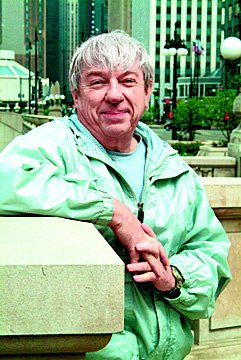
Jack McDevitt

Other than that, McDevitt is a great science-fiction writer, one who has the Nebula Awards to prove it. He mingles history, archaeology, politics, religion, personal relationships, and science together to create plots with real depth. His world-building is great as well. His world isn't so overly constructed that it takes away from the plot, a huge pet peeve of mine, but neither is it so underdeveloped that it's hard to imagine what's going on. A little more character description would have been nice but the reader is able to piece together an image of the characters through things that aren't related to hair color or height. McDevitt uses actions, dialogue, and other devices to build his characters. The result is rather impressive.

The dialogue never seemed to be too cliche or dull. In fact, it seemed rather natural, even when talking about things like aliens and spaceships. Each character had a unique voice and no one seemed fake or unrealistic. This was a nice change after the last book that I read. Sometimes McDevitt overuses fragment sentences, but after a while the reader doesn't notice. It feels like somewhere around the middle of the book he found his rhythm.

The dragons mentioned in the title of this post aren't real dragons and I can't talk about them without giving anything away, but I will say that the ending of this novel was exciting but also kind of strange. Not in a bad way, just in a way that makes you go "hmm...." I thoroughly enjoyed it along with the rest of the book.

The Engines of God is the first book in a series that revolves around the character of Priscilla Hutchins and I intend to read them all...eventually. I've become rather intrigued by what happens to her next, especially since throughout the book there are little hints. McDevitt seeds his audience's interest in future novels at the same time that he's drawing them into the plot of the present one, which is, I believe, indicative of masterful writing.

I'm giving The Engines of God 4 out of 5 Gabriels. It's not my favorite book I've ever read but I really liked it and would probably reread it, especially once I get my hands on the other novels in the series.


-Gabe